Deadwood becomes hazardous
As the canopy declines, dead branches can become brittle and detach in wind. This is particularly important beside roads, paths, buildings and play areas.
Tree health
Ash dieback is changing the landscape across Britain. Understanding the disease helps you make the right decision for the tree, your property and everyone who uses the space around it.
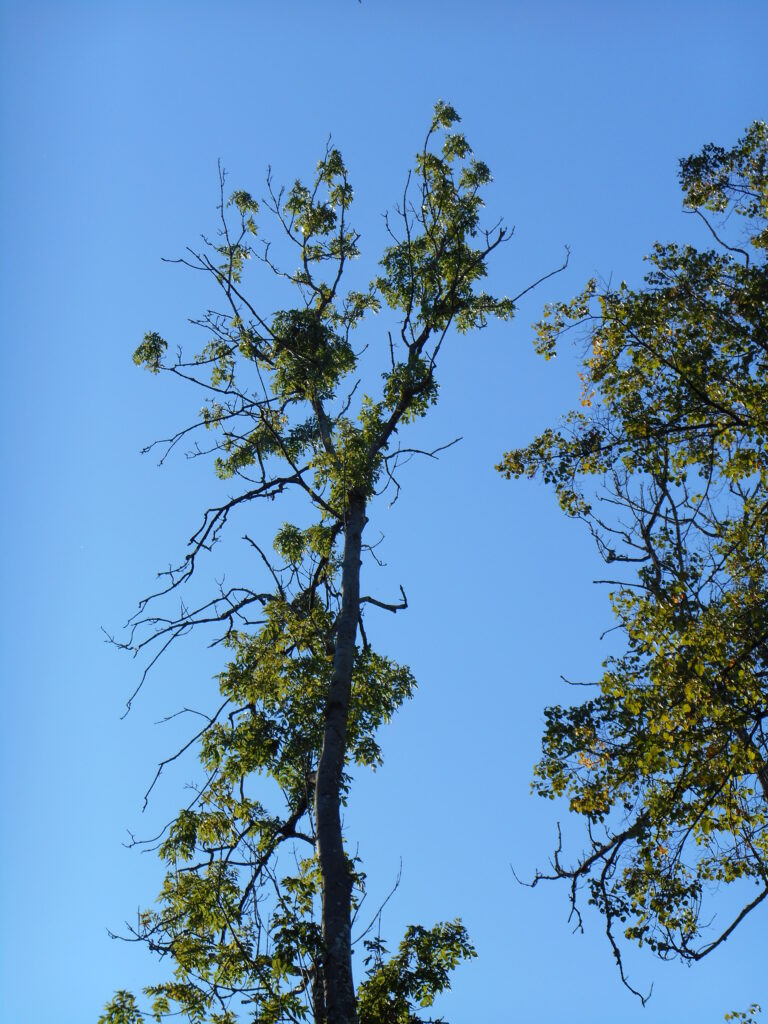
The disease
Ash dieback is caused by the fungus Hymenoscyphus fraxineus. It blocks the tree's water-conducting tissues and causes lesions, dead shoots and progressive crown loss. Young trees can decline quickly; older trees may survive for years but often become increasingly fragile.
The scale of the threat
Ash dieback is expected to affect up to 80% of ash trees in England. Many infected trees will decline and die, although a small proportion may show natural tolerance. Once an infected tree is confirmed, early professional assessment is important: weakened branches can become brittle and fail without warning, especially beside roads, buildings and well-used gardens. Removing a tree is not automatic, but where the risk is high, acting promptly helps protect people and property before the tree becomes more dangerous to work on.
What to look for
The symptoms can vary with the season and the age of the tree. A qualified arborist should assess the tree before any work is planned.
Dead or dying shoots, especially at the ends of branches
Diamond-shaped lesions where branches meet the stem
Sparse or uneven foliage and a thinning crown
Bark cracks or areas of discoloured bark
Epicormic growth appearing lower down the trunk or branches
An increasing amount of deadwood in the crown
Why removal may be necessary
Ash dieback does not automatically mean every ash tree must be felled. The decision depends on the tree's condition, its location and the level of risk it presents.
As the canopy declines, dead branches can become brittle and detach in wind. This is particularly important beside roads, paths, buildings and play areas.
Affected trees can develop decay and structural weakness as their natural defences are reduced. A tree health inspection helps identify whether retention, pruning or removal is the safest option.
Where a tree stands within falling distance of people or property and cannot be made safe with proportionate work, removal may be the responsible course of action.
Need an assessment?
We meet you on site, assess the work and provide a written quote by email, together with a copy of our insurance for peace of mind.